INDUSTRIES / HPC & RESEARCH
Liquid cooling moves the heat. The amps still need copper.
Supercomputer cabinets now draw AI-class power through direct liquid cooling, funded in committee-reviewed projects and installed in the narrow window between semester or fiscal deadlines. The busway is cut to measured run lengths, and the efficiency line on the quote is read as carefully as the FLOPS line.
PROGRAM REALITIES
| Density | Liquid-cooled cabinets at AI-class rack power |
|---|---|
| Procurement | Per-project busway lengths and tap maps |
| Schedule | Delivery locked to shutdown windows |
| Budget line | 96% Titanium vs 94% Platinum scrutiny |
| Accountability | One power vendor across the hall |
PEER REVIEW, FOR AMPS
Grant committees read the power BOM too.
Four realities that make HPC power procurement unlike any commercial build.
| Reality | What it means on site | Where programs stall |
|---|---|---|
| Density | Liquid-cooled cabinets near AI-class power | High-current feed and cooling must be retrofitted in the same window |
| Schedule | Construction only during shutdown windows | A 45–60 day busway lead has to land before the window opens, or the year slips |
| TCO review | Every efficiency point is questioned | 96% vs 94% conversion is ≈22 kW less loss per MW of IT load — roughly 190 MWh a year at full load |
| Scope gaps | Hall split across electrical trades | One factory for busway, PDU and PSU removes the interface nobody owns |
VOLTFAB RESPONSE
Copper cut to measure, delivered to the window.
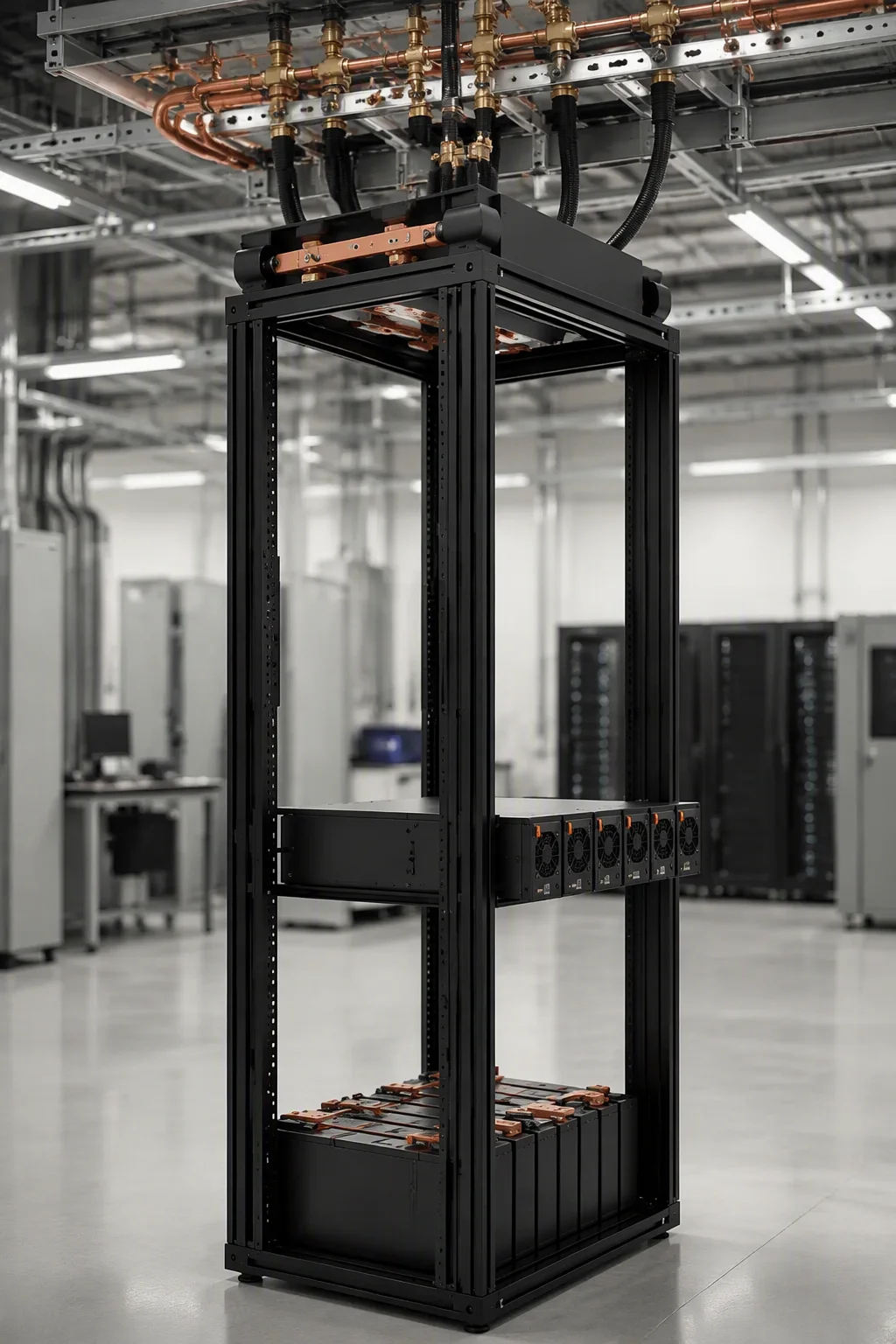
Busway runs are fabricated to field-measured lengths with tap positions fixed by the row layout, type-tested to UL 857 and IEC 61439-6, and delivered as a numbered kit so a five-night shutdown is assembly rather than fabrication. At the cabinets, 54 V CRPS supplies convert at 96% Titanium — the two-point efficiency margin a TCO committee can defend in writing. Programs quote per run with 45–60 day leads planned backwards from your window, and CRPS pilots start at 100 pcs with 30–45 day builds.
SCORING BASELINE
Line items procurement actually scores.
The evaluation grid behind most HPC power awards.
| Scoring line | Committee requirement | VoltFab delivered value |
|---|---|---|
| Ampacity | 400–800 A feed for liquid-cooled rows | Open-channel copper track, 100% factory pre-tested |
| Efficiency | Titanium tier conversion | 96% @50% load, ≈22 kW less loss per MW vs Platinum |
| Type test | Evidence for the grant file | UL 857 and IEC 61439-6 reports shipped with the run |
| Delivery | Shutdown-window logistics | Numbered run kits, leads planned back from the window date |
| Integration | One accountable power vendor | Busway, PDU and PSU engineered on one production floor |
| Program | Grant-paced volumes | Busway quoted per project; CRPS MOQ 100 pcs, 30–45 days |
RECOMMENDED LINES
Three lines carry the HPC brief.
Data Center Busway
Run lengths and tap maps cut per project. UL 857 / IEC 61439-6 type-tested, 45–60 day leads.
Explore →CRPS Server PSU
550 W to 5.5 kW+ at 96% Titanium. 12 V and 54 V rails, 100% burn-in, MOQ 100 pcs.
Explore →Integrated Rack Power
Busway, PDU and PSU on one delivery slot. A single vendor for interface-free commissioning.
Explore →FAQ
What HPC project leads ask before signing.
Can busway changes happen without a full-hall shutdown?
What does Titanium efficiency save a 2 MW hall?
How do you hit a five-night construction window?
HPC PROGRAM