INDUSTRIES / COLOCATION & EDGE
Rack density jumped 69% in a year. Your power wall didn't.
AFCOM's 2026 survey puts the average rack at 27 kW — up 69% year over year — while many halls were wired when 5–15 kW was generous. And when tenants are invoiced by the outlet, a PDU that cannot prove its numbers turns into a credit note.
TENANT-FACING BASELINE
| Density | 27 kW average per rack (2026, +69% YoY) vs 5–15 kW-era halls |
|---|---|
| Billing | ±1% billing-grade metering at outlet level |
| Remote ops | Per-outlet switching · SNMP v3 / Modbus TCP / Redfish |
| Footprint | 0U vertical mounts · 8–48 C13/C19/HDOT outlets |
| Reconfigure | Tool-free busway tap-offs between leases |
THE OPERATOR'S LEDGER
Every unverified outlet is a refund waiting to happen.
Colocation sells measured electricity, so the metering chain is the product — and it is under attack from five sides.
| Pressure point | The number behind it | What it costs the floor |
|---|---|---|
| Density creep | 27 kW average rack, +69% in one year | 5–15 kW-era breaker walls trip as GPU cages land |
| Billing disputes | ±1% billing-grade accuracy required | Outlet invoices without calibrated metering fail tenant audits |
| Unstaffed edge sites | One truck roll per manual reset | A hung edge node idles for hours; a switched PDU resets it in seconds |
| Tenant churn | Days, not months, between leases | Hard-wired drops strand capacity; tool-free taps re-power a cage in about an hour |
| White space | 0U vertical vs 2U of rail space | Every 2U lost to a PDU is 2U a GPU cage cannot rent |
VOLTFAB RESPONSE
Meter where you invoice. Switch where you cannot drive.
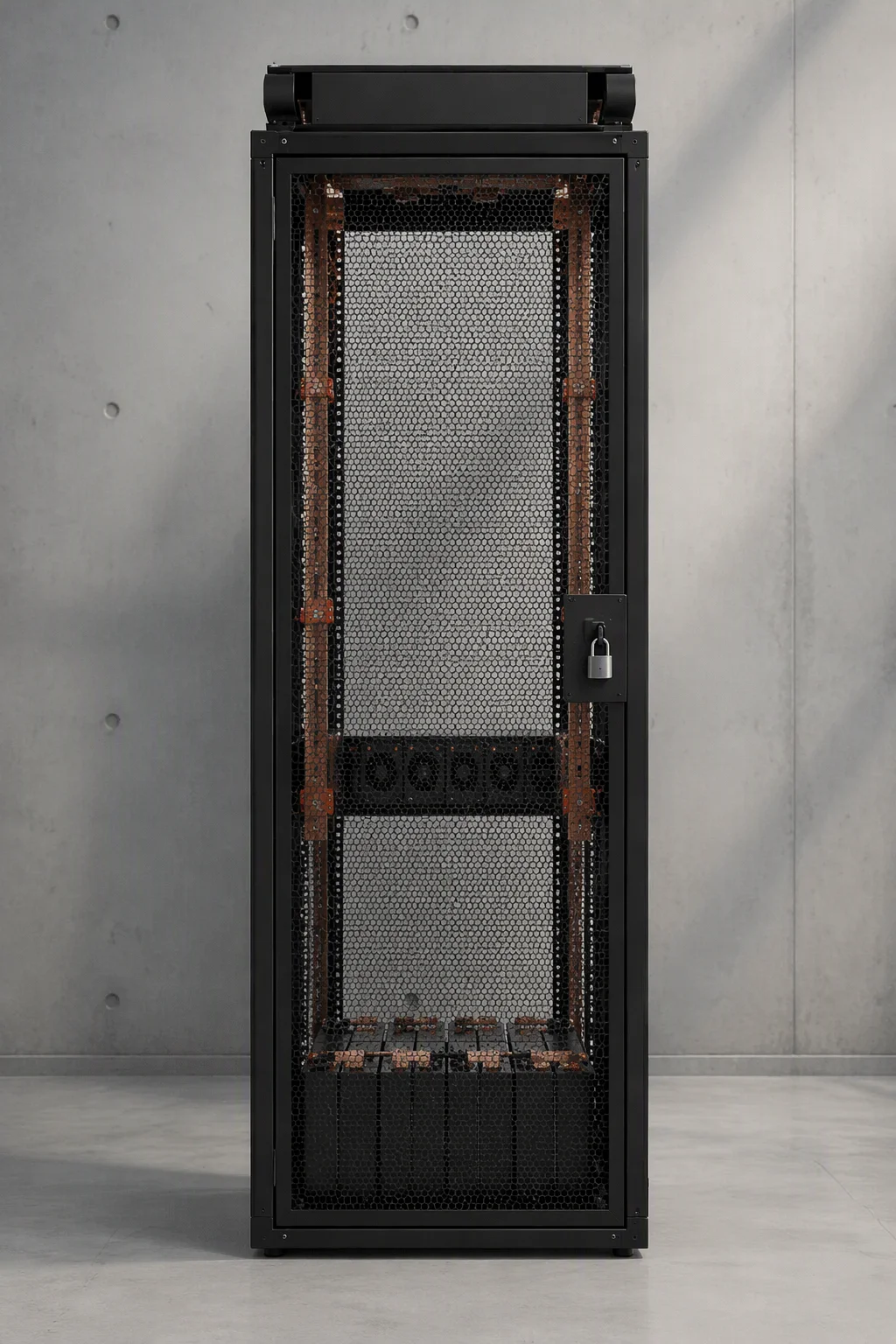
Switched+outlet PDUs measure every outlet at ±1% and report over SNMP v3, Modbus TCP or Redfish, so NOC staff reset a hung edge node without a truck roll. Overhead busway with metered tap-offs lets a hall be re-zoned between tenants without an electrical crew — clamp a tap, power a cage. Commercially it fits opex pacing too: MOQ starts at 10 pcs with 15–30 day leads, sized to refresh cycles rather than megaproject timelines.
RFP BASELINE
Lines colocation buyers now write into tenders.
Six requirements that moved from nice-to-have to pass/fail in current colo RFPs.
| Requirement | Tender wording | VoltFab delivered value |
|---|---|---|
| Metering | ±1% billing-grade, per-outlet kWh logs | Unit-calibrated switched+outlet PDUs with exportable records |
| Control | Remote individual outlet switching | SNMP v3 / Modbus TCP / Redfish with threshold alarms |
| Form factor | 0U vertical, 16–63 A, mixed outlets | C13/C19/HDOT maps up to 48 outlets per strip |
| Feed | Overhead busway with per-tap metering | UL 857 track, 160–800 A, tool-free tap-offs |
| Safety | Recognized IT-equipment compliance file | UL 62368-1, CE/UKCA evidence per shipment |
| Program | Opex-paced purchasing | MOQ 10 pcs, 15–30 day lead, FOB/CIF/DDP terms |
RECOMMENDED LINES
Three lines carry the colo brief.
Rack PDU
Switched+outlet models meter at ±1% with per-outlet logs. 0U mount, up to 48 mixed outlets, SNMP v3 — MOQ 10 pcs.
Explore →Data Center Busway
Tool-free tap-offs re-zone a hall between tenants. UL 857, 160–800 A, per-tap metering options.
Explore →Integrated Rack Power
Feed, metering and conversion from one vendor. One PO and one QC standard for whole-hall refreshes.
Explore →FAQ
Questions colo operators ask first.
What actually makes a PDU billing-grade?
How fast can a hall be re-zoned for a new tenant?
Can edge sites really run without staff on site?

COLO & EDGE PROGRAM